
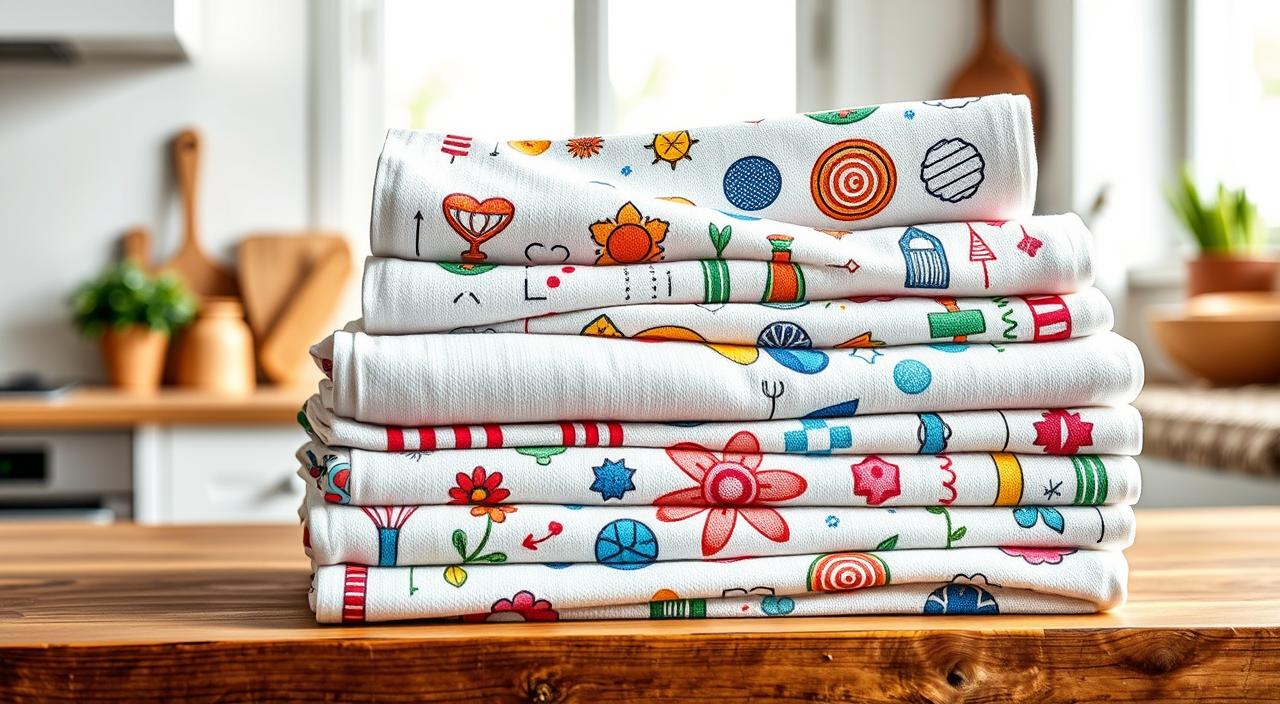
Adding a personal touch to your kitchen is easy. Just make your own custom dish towels. This fun DIY project lets you show off your style in your home.
With a few simple materials and basic techniques, you can make beautiful DIY dish towels. They’ll make your kitchen unique. Whether it’s for a special gift or to add some flair, making your own towels is a great start.
These easy-to-make towels can make your kitchen more personalized and special.
Why Personalized Dish Towels Are Worth Making
Making your own personalized dish towels is a fun DIY project. They add warmth and personality to your kitchen. Plus, they have many practical benefits.
Practical Benefits of Custom Dish Towels
Custom dish towels help keep your kitchen organized. You can use one for drying dishes and another for wiping down countertops. This makes your kitchen workflow more efficient. They can also be made from materials that are more absorbent or durable than regular towels.
Personal and Gift-Giving Value
Personalized dish towels make great gifts for friends and family. You can add names, initials, or special messages to make them unique. This personal touch makes your gifts special and shows you care.
They’re also a thoughtful way to show appreciation. Whether it’s for a housewarming or a gift for a cooking lover, a customized towel is both useful and meaningful.
Essential Materials and Tools You’ll Need
Before starting your DIY dish towel project, gather all needed materials and tools. Having everything ready will make the process smoother and more fun.
Types of Dish Towels to Use as Base
The type of dish towel you choose is key. You can pick from cotton, linen, or microfiber.
Cotton vs. Linen vs. Microfiber Options
Cotton is popular for its absorbency and durability. Linen offers a natural look and great absorbency. Microfiber is quick-drying and soft.
Pre-hemmed vs. DIY Hemming
You can use pre-hemmed towels or hem them yourself. Pre-hemmed saves time, while DIY gives you control over the finish.
Basic Supplies for All Personalization Methods
For any personalization method, you’ll need basic supplies. These include fabric paint, embroidery floss, or iron-on transfer paper. Having these essentials lets you customize your dish towels well.
Optional Tools That Make the Process Easier
While not essential, some tools can make personalizing easier. These include embroidery hoops, stencils, and a heat press. These tools help you get professional-looking results.
Choosing the Right Design for Your Dish Towels
The right design can make your personalized kitchen towels stand out. Think about your kitchen’s look and how the towels will match. This will help you choose the perfect design.
Design Considerations for Kitchen Textiles
When picking a design, think about colors, patterns, and themes. Bright colors and fun patterns can add a playful vibe. On the other hand, softer tones can give a sophisticated feel. Make sure it fits with your kitchen’s style and other textiles.
Where to Find Inspiration and Free Patterns
Stuck for ideas? There are many places to find help. Online resources and templates can guide you.
Online Resources and Templates
Pinterest and design blogs have lots of free patterns and templates. You can also find ideas in cookbooks, home decor magazines, and social media.
Creating Original Designs
Want to create something unique? Think about your personal style and your kitchen’s theme. Mix colors, patterns, and text to make your custom dish towels truly special.
Learn How to Make Personalized Dish Towels at Home: Basic Techniques
Making your own dish towels can be fun. You can pick from many methods to make them your own. Each method has its own benefits and challenges.
Understanding Different Personalization Methods
There are several ways to make your dish towels special. You can use embroidery, iron-on transfers, or fabric paint. Embroidery gives a classic look. Iron-on transfers are quick and easy. Fabric paint lets you be creative.
You can pick one or mix methods for the perfect look.
Matching Techniques to Your Skill Level
Think about your skill level and the look you want. If you’re new, iron-on transfers are a good start. More experienced folks might like embroidery or fabric paint.
Try different techniques to see what works best for you. This way, you can make beautiful, useful DIY dish towels for your kitchen.
Embroidery Method: Adding Personal Touches with Thread
Embroidery can transform simple dish towels into personalized kitchen items. It brings a unique touch to your home decor. This timeless technique is perfect for creating custom kitchen textiles.
Hand Embroidery Basics for Beginners
Hand embroidery is ideal for beginners. It’s easy to start with and lets you be creative. You only need a few basic tools.
Essential Stitches to Master
Learning basic stitches is key to starting embroidery. The running stitch, backstitch, and satin stitch are essential. They’re used in many embroidery projects.
Transferring Patterns to Fabric
Transferring your design to fabric is important. You can use tracing paper, a heat pen, or fabric markers. These methods help you get your design right.
Machine Embroidery Options
Using an embroidery machine can make designs more intricate. It’s quicker than hand embroidery. You can pick from many designs and fonts.
Step-by-Step Embroidery Process
To embroider your towels, prepare your fabric and design first. Then, thread your needle or set up your machine. Follow your pattern, and enjoy making something unique.
Both hand and machine embroidery let you add a personal touch. This makes your kitchen textiles truly special.
Iron-On Transfer Method: Quick and Easy Customization
Looking for a fast way to make your kitchen textiles unique? Try iron-on transfers. They let you add your own designs to dish towels with ease.
Types of Iron-On Transfers Available
There are many iron-on transfers for customizing dish towels. You can find:
- Light transfers for white or light-colored fabrics
- Dark transfers for dark-colored fabrics
- Glitter transfers for added sparkle
- Special effect transfers, such as metallic or glow-in-the-dark
Choosing the right transfer depends on your towel’s color and type. It also depends on the look you want.
Creating Your Own Custom Transfers
To make your own transfers, you need transfer paper and a design. Here’s how to start:
Using Transfer Paper
Transfer paper is made for iron-on transfers. Print your design on it with an inkjet printer. Remember to mirror your image, as it will flip when applied.
Digital Design Tips
Keep your design simple and high-resolution. Use bold colors and clear text. Adobe Photoshop or free online tools can help you create your design.
Application Process and Tips
Applying iron-on transfers is easy. Heat your iron to the right temperature (usually cotton or polyester). Place the transfer on your towel, cover with parchment paper, and iron as directed. Here are some tips for success:
- Make sure the fabric is clean and dry
- Use steady, firm pressure
- Avoid stretching or pulling the fabric while ironing
- Let the transfer cool before washing
Fabric Paint and Stamping Techniques
Fabric paint and stamping are fun ways to make your dish towels unique. You can pick from many paints and methods to get cool designs.
Selecting the Right Fabric Paints
Choosing fabric paint can be tough. Look for high-quality fabric paints made for cotton or your towel’s material. Think about the colors and finish you want. Some paints are soft and matte, while others are bright and glossy.
| Paint Type | Characteristics | Best Use |
|---|---|---|
| Acrylic Fabric Paint | Vibrant colors, durable | Detailed designs, bold colors |
| Water-Based Fabric Paint | Easy to mix, soft finish | Pastel colors, subtle designs |
Creating Custom Stamps
Custom stamps can make your dish towels special. You can use foam sheets or linoleum blocks to make stamps. First, design your image. Then, transfer it to your material and carve it out.
Stenciling Methods
Stenciling is great for fabric paint. You can use store-bought stencils or make your own from cardstock or acetate. Place the stencil on your towel with tape, then paint with a brush or sponge.
Applying Paint Properly
To get great results, apply fabric paint right. Here are some tips:
Brushing Techniques
Use soft-bristled brushes for smooth paint. Don’t press too hard to avoid bleeding.
Preventing Bleed-Through
To stop paint from showing on the other side, use cardboard or plastic. This keeps the paint in place and makes your design sharp.
Advanced Personalization: Screen Printing at Home
Exploring screen printing can take your DIY skills to new heights. It’s a method that lets you create custom kitchen textiles with endless possibilities. You can make multiple dish towels with the same design, perfect for sets or gifts. With the right tools and practice, you can get professional-looking results at home.
DIY Screen Printing Setup
To begin screen printing, you need a few key items: a screen, a squeegee, ink, and a frame. You can buy a DIY kit or get the parts separately. The screen is coated with a special emulsion that lets you make your design.
Key components for a DIY screen printing setup:
- A screen printing frame
- Light-sensitive emulsion
- A squeegee
- Screen printing ink
Screen Printing Process for Dish Towels
The process starts with creating your design on the screen, then coating it with emulsion. After drying, you expose the screen to light to harden the emulsion. Finally, you wash out the unexposed parts to reveal your design.
Creating Your Screen
First, apply your design to the screen with the emulsion. Once it’s dry, expose the screen to light to harden the emulsion around your design. Then, wash out the unexposed parts to reveal your design.
Printing Multiple Towels
With your screen ready, start printing. Place a towel flat, position the screen over it, and use the squeegee to apply ink. Repeat for each towel, re-inking the screen as needed.
Here’s a simple comparison of the costs involved in screen printing versus other personalization methods:
| Method | Initial Cost | Cost Per Item |
|---|---|---|
| Screen Printing | $50-$100 (setup) | $2-$5 |
| Embroidery | $20-$50 (machine) | $5-$10 |
| Iron-On Transfer | $10-$20 (printer) | $1-$3 |
Creative Project Ideas for Personalized Dish Towels
Make your kitchen special with personalized dish towels that show off your style. These DIY projects are perfect for making a thoughtful gift or adding a personal touch to your kitchen. They’re fun and rewarding.
Seasonal and Holiday Designs
Make seasonal and holiday-themed dish towels to match your kitchen or as gifts. Use fabric paint, iron-on transfers, or embroidery for festive designs like snowflakes or holly leaves. These towels are great DIY projects for the holidays.
Monogrammed and Name Designs
Add elegance with monogrammed or name designs on your dish towels. Use embroidery or iron-on transfers for custom monograms or names. This makes your kitchen towels unique and special.
Themed Sets for Gifts
Make themed sets of dish towels as gifts for friends and family. For example, a coastal theme with anchors or seashells is perfect. These towels are great for housewarming gifts or holiday presents.
| Project Idea | Technique | Skill Level |
|---|---|---|
| Seasonal Dish Towels | Fabric Paint | Beginner |
| Monogrammed Towels | Embroidery | Intermediate |
| Themed Gift Sets | Iron-on Transfers | Beginner |
Troubleshooting Common Issues
When making personalized dish towels, you might run into some common problems. These can be fixed with the right techniques. Whether you’re painting, using iron-on transfers, or embroidering, knowing how to correct mistakes is key to getting great results.
Fixing Paint and Transfer Mistakes
Don’t worry if you mess up with fabric paint or iron-on transfers. For paint blunders, a damp cloth can help if it’s still wet. If it’s dry, you might need to use a remover or cover it up with more paint or a new design.
For iron-on transfer errors, like misalignment or wrinkles, try heating it again with parchment paper on top. If it’s way off or wrong, you might have to start fresh with a new transfer.
| Mistake Type | Fixing Method | Prevention Tip |
|---|---|---|
| Paint Smudge | Blot with damp cloth | Use a small brush |
| Transfer Misalignment | Re-heat with parchment paper | Measure carefully before applying |
Addressing Embroidery Problems
Embroidery mistakes can be a bummer, but they’re usually fixable. If you’ve made a stitching error, use a seam ripper to remove the wrong stitches. For bigger mistakes, you might need to redo the area or add something to cover it up.
To avoid embroidery problems, use good thread and needles, and take your time. Practice on scrap fabric before working on your towel to reduce mistakes.
Conclusion
Now you know how to make personalized dish towels. It’s time to get creative in your kitchen. Custom dish towels are perfect for adding a personal touch to your home or making unique gifts.
Try out different designs, colors, and personal touches. This way, you can make custom dish towels that show off your style. Use these towels to make your kitchen look warm and elegant. Or, give them as gifts to friends and family. The possibilities are endless, and with practice, you’ll be a pro at making personalized kitchen towels.

Yenny Monroe is a content creator passionate about lifestyle, fashion, and everything that inspires authenticity.